
More and more organizations are talking about becoming “AI-First companies,” although in practice the concept is often confused with implementing chatbots, automating responses, or adding artificial intelligence tools.
Being an AI-First company is something deeper: it involves redesigning processes, decisions, and operations so that artificial intelligence becomes a structural part of the business model.
Companies with high digital volume—especially in sales, ecommerce, marketing, or customer service—are already moving beyond the experimental stage. For them, adopting an AI-First approach is not a technological test but an operational decision: it enables greater efficiency, improves conversion rates, and allows the business to scale without proportionally increasing its structure.
What an AI-First Company Really Is
An AI-First company is one that designs its processes starting from artificial intelligence as a central layer of the business operating system.
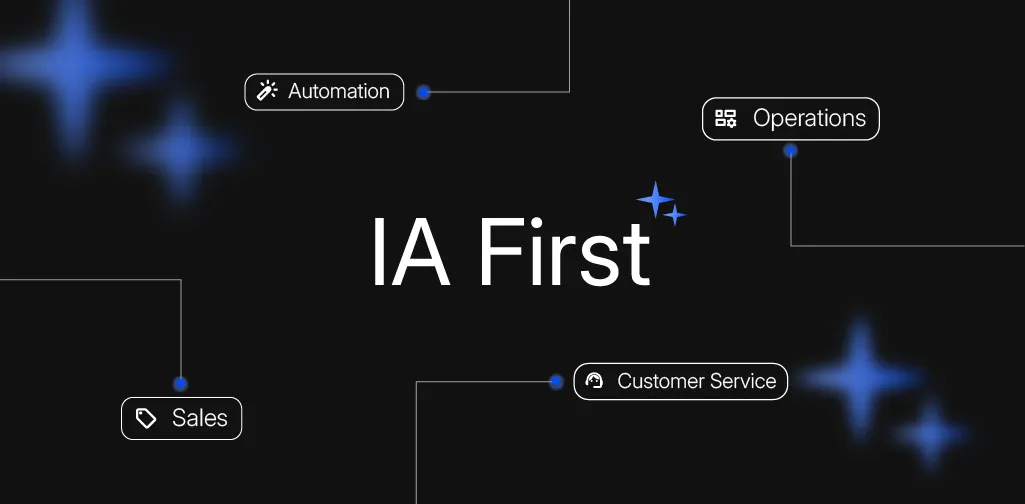
AI is not used only to automate isolated tasks. It is integrated into critical flows where it directly impacts results: sales, customer service, operations, and analytics. This changes the traditional logic of technology implementation.
In many organizations, artificial intelligence is added to existing processes as an incremental improvement. In an AI-First company, by contrast, processes are redesigned from the beginning by considering which decisions can be managed by AI and which require human intervention. The result is a more efficient and scalable operating model.
The adoption of artificial intelligence in companies is accelerating, although it is still in the scaling phase. The latest McKinsey Global Survey on the state of AI shows that 62% of organizations are already experimenting with AI agents, reflecting strong interest in incorporating these systems into business processes. Initial results are encouraging: companies report improvements in costs and revenue across different use cases, and 64% say that AI is driving their capacity for innovation. As these initiatives expand within organizations, 39% already report an impact on EBIT at the enterprise level, indicating that integrating AI into operations and business decisions is beginning to be reflected in financial results.
Why Companies Are Adopting This Model
The growth of artificial intelligence in the business environment is not driven only by technological innovation; it is also driven by competitive pressure.
Digital channels generate more and more interactions, inquiries, and commercial opportunities. Managing that volume exclusively with human teams becomes expensive and difficult to scale. In contrast, artificial intelligence can absorb that growth by automating interactions, analyzing data in real time, and optimizing operational decisions.
Gartner estimates that by 2028, 90% of B2B purchases will be mediated by AI agents, generating more than 15 trillion dollars in B2B spending through AI agent exchanges.
This does not mean eliminating human intervention, but redistributing it. AI-First companies use AI to manage repetitive and high-volume tasks, while human teams focus on strategic decisions, consultative sales, or complex situations.
This shift directly impacts three key business dimensions:
- operational efficiency
- response speed
- conversion capacity
For this reason, the concept of AI-First is moving beyond being a technological trend to becoming a strategic decision.
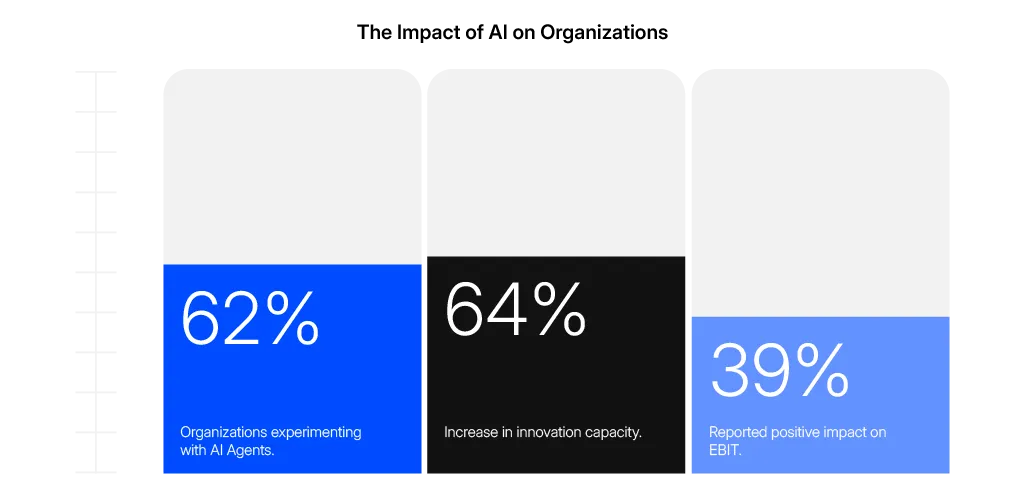
Relationship between AI agent adoption, innovation growth, and the resulting impact on organizational EBIT. Source: McKinsey Global Survey.
Where the First Impact Appears: Sales, Customer Service, and Operations
In practice, companies adopting an AI-First model usually begin with processes where interaction volume is high and economic impact is clear.
One of the first areas where artificial intelligence generates visible results is the commercial area.
Automation allows companies to manage processes such as:
- lead generation and qualification
- prospect follow-up
- abandoned cart recovery
- assistance during the purchase process
When these flows are properly integrated, artificial intelligence can accompany the customer throughout the entire commercial journey.
A similar transformation occurs in the customer experience domain. AI makes it possible to automate frequent inquiries, provide immediate responses, and maintain permanent availability without increasing operational costs.
Conversational channels, especially WhatsApp, have become one of the spaces where this integration is most evident.
Meta reports that more than one billion people interact weekly with businesses through WhatsApp. However, many organizations still manage this channel manually or as simple support. Companies operating with an AI-First logic transform it into a structured sales and service channel.
What an AI-First Company Looks Like in Practice
Beyond the concept, an AI-First company can be recognized by how its processes operate. Instead of relying exclusively on human teams for every interaction, the organization uses artificial intelligence to manage conversations, qualify commercial opportunities, and automate operational tasks.
In conversational channels, this often involves the use of AI agents capable of interacting with customers in real time, integrated with business systems such as CRM platforms or ecommerce systems.
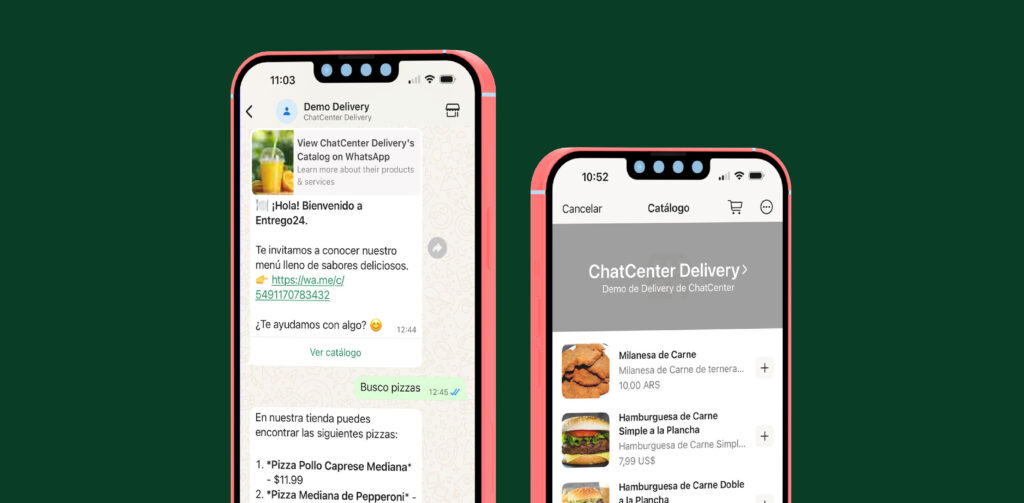
Companies specialized in conversational automation, such as Chat Center Service, have developed models where AI can manage complete commercial processes through WhatsApp—from the first contact with the customer to the closing of the sale.
In implementations of this kind, concrete results can be observed:
- 18% average conversion in sales managed by AI agents
- 25% conversion in abandoned cart recovery through WhatsApp
- more than 10 million conversations managed across different industries
Several companies have already applied these models in their operations.
Movistar, for example, increased its digital revenue by 120% year over year in Mexico by integrating conversational sales strategies, while Assist Card increased its revenue by 53% after developing WhatsApp as a sales and customer service channel.
These cases show that the AI-First concept is not limited to technology companies. It applies to any organization that manages digital processes with a high volume of interactions.
How to Start Building an AI-First Company
Adopting an AI-First model does not mean replacing people with technology. It means redesigning processes so that artificial intelligence manages repetitive tasks and enables operations to scale efficiently.
The first step is usually identifying critical processes where automation can generate the greatest impact. In many companies, these processes are related to sales, customer service, or recovery of commercial opportunities.
Next, it is necessary to map the complete flows—from the first contact with the customer to the closing of the interaction.
Based on this analysis, systems can be designed in which artificial intelligence manages initial interactions and automates operational tasks, while human teams intervene in situations that require judgment or negotiation.
Companies specialized in conversational automation, such as Chat Center Service, implement these types of projects by integrating artificial intelligence with messaging channels, ecommerce platforms, and enterprise management systems. The approach is not about adding a bot, but about building end-to-end automated processes capable of generating measurable results in sales, efficiency, and customer experience.
A Change in the Operating Model
Talking about AI-First companies does not mean anticipating a distant future. It means recognizing a change that is already happening across multiple industries.
Organizations that integrate artificial intelligence into their commercial and service processes not only improve efficiency. They also build an infrastructure that allows them to manage a greater volume of interactions without proportionally increasing their structure.
Being an AI-First company today means redesigning the operating model of the business around artificial intelligence.
Discover how to turn WhatsApp into your main sales channel with end-to-end AI-powered automation